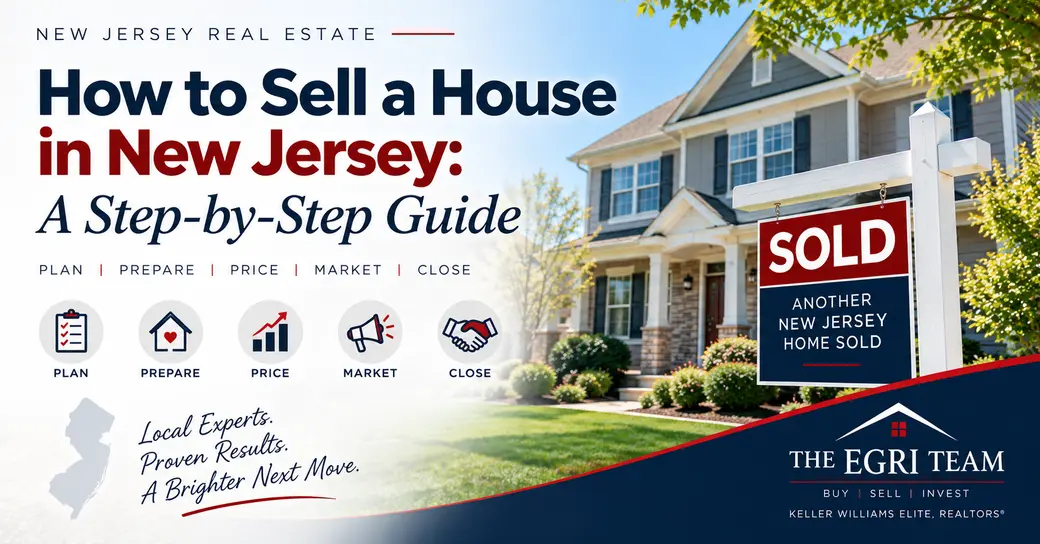
How to Sell a House in New Jersey: A Step-by-Step Guide
Selling a house in New Jersey involves much more than putting a sign in the yard and waiting for an offer.
From determining the right price and preparing your home for the market to negotiating offers, attorney review, inspections, appraisal, and closing, there are several important stages between deciding to sell and handing over the keys.
Understanding the process before you begin can help you make better decisions, avoid unnecessary surprises, and prepare for what comes next.
Here is a step-by-step look at how to sell a house in New Jersey.
Step 1: Understand Your Goals and Selling Timeline
Before deciding on a listing price or making improvements, start with the bigger question:
Why are you selling, and what needs to happen next?
Your strategy may be different depending on whether you are:
- Moving to another home in New Jersey
- Relocating out of state
- Downsizing
- Selling an investment property
- Handling an inherited property
- Selling before purchasing your next home
- Trying to coordinate a purchase and sale at the same time
Your desired timing can affect pricing, preparation, marketing, and how you evaluate offers.
If you need to purchase another property while selling your current home, read our guide on how to buy and sell a house at the same time in New Jersey.
Step 2: Determine What Your Home May Be Worth
One of the first questions most sellers ask is:
“How much is my house worth?”
A home's market value is influenced by more than its size or what a nearby property sold for.
Factors can include:
- Recent comparable sales
- Current competing listings
- Location
- Property condition
- Updates and improvements
- Lot and property characteristics
- Current buyer demand
- Market conditions
- Features that may make the property more or less desirable to buyers
An online estimate can be a useful starting point, but it cannot fully account for everything that affects a property's value.
You can start with our New Jersey home value tool, but before listing, we recommend a more detailed review of the property and current comparable sales.
Step 3: Prepare Your Home for the Market
You do not necessarily need to renovate your entire home before selling.
The goal is to determine which improvements are likely to help the property show well and which may not provide enough benefit to justify the time or expense.
Depending on the home, preparation may include:
- Decluttering
- Deep cleaning
- Touch-up painting
- Improving curb appeal
- Completing minor repairs
- Addressing deferred maintenance
- Removing excess furniture or personal items
- Preparing rooms for photography and showings
Before spending thousands of dollars on improvements, it can be helpful to get a real estate professional's perspective on what today's buyers are likely to notice.
For a deeper look at this decision, see how to increase your home value before selling.
Step 4: Set the Right Listing Price
Pricing is one of the most important decisions you will make when selling your home.
A price that is too high can discourage buyers, reduce showing activity, and cause a property to sit on the market.
A price that is too low without a deliberate strategy can potentially leave money on the table.
The objective is not simply to choose the highest number that sounds appealing. It is to establish a pricing strategy based on the property's value, competing inventory, recent sales, current market conditions, and your goals.
Our guide to pricing your home correctly in New Jersey explains this in more detail.
Step 5: Launch and Market Your Home
Once the home is prepared and the pricing strategy is established, it is time to bring the property to market.
Good real estate marketing should do more than simply place the home in the MLS.
Depending on the property and marketing plan, the launch may include:
- Professional photography
- Property descriptions
- MLS exposure
- Major real estate websites
- Digital advertising
- Social media marketing
- Email marketing
- Agent-to-agent promotion
- Open houses
- Buyer follow-up
- Additional property-specific marketing
The first days on the market can be particularly important because that is when a new listing may receive significant attention from buyers who have already been watching the market.
Presentation, pricing, exposure, and launch strategy should work together.
Step 6: Review and Negotiate Offers
Receiving an offer is exciting, but the highest offer is not automatically the best offer.
Sellers should look at the complete package.
That may include:
- Purchase price
- Buyer financing
- Down payment
- Deposit terms
- Proposed closing date
- Inspection terms
- Appraisal terms
- Financing contingencies
- Property-sale contingencies
- Requested inclusions or exclusions
- Other terms that may affect the likelihood or timing of closing
Depending on market conditions, you may receive one offer, several competing offers, or an offer that requires further negotiation.
Price matters, but so do certainty, timing, contingencies, and the buyer's ability to complete the transaction.
If an offer comes in below expectations, don't assume the conversation is over. Our guide on handling lowball offers when selling a home in New Jersey explains how sellers can evaluate their options.
Step 7: Navigate Attorney Review
Attorney review is an important part of many New Jersey residential real estate transactions.
When a qualifying residential contract is prepared by a New Jersey real estate licensee, the contract contains an attorney-review provision. The buyer and seller have an opportunity to consult attorneys, who may review the contract, propose changes, or disapprove it during the applicable review period.
For licensee-prepared contracts, New Jersey's attorney-review clause provides a three-business-day period beginning from delivery of the fully signed contract. Attorneys may also negotiate revisions, and the parties can agree in writing to extend the review period.
Your attorney can advise you about the legal terms of your particular transaction.
Once attorney review is successfully concluded, the transaction moves forward under the terms agreed upon by the parties.
Step 8: Work Through Inspections, Appraisal and Buyer Contingencies
After attorney review, several parts of the transaction may begin moving at the same time.
Home Inspection
If the contract includes an inspection contingency, the buyer may conduct inspections and potentially request repairs, credits, or other remedies depending on the contract and findings.
Not every inspection issue requires the same response. Sellers and their attorney should evaluate requests based on the contract, the property's condition, the issue involved, and the overall transaction.
If you're wondering what you may actually have to address, see what repairs sellers are required to make in New Jersey.
Appraisal
If the buyer is financing the purchase, the lender will generally order an appraisal as part of the mortgage process.
If an appraisal creates an issue, the available options will depend on the contract, financing, appraisal contingency if applicable, and negotiations between the parties.
Mortgage and Other Contingencies
The buyer may also need to satisfy financing and other contractual requirements before closing.
During this stage, communication among the real estate agents, attorneys, lender, title company, and other professionals involved becomes especially important.
Step 9: Prepare for Closing
Once the major contingencies have been addressed, attention turns toward closing.
The seller may need to work with their attorney and other professionals to address items such as:
- Title issues
- Mortgage payoff information
- Required documents
- Final contractual obligations
- Municipal requirements that apply to the property
- Agreed-upon repairs or credits
- Final walkthrough preparation
- Moving and possession arrangements
Requirements can vary by municipality and transaction, so sellers should confirm what applies to their particular property rather than assuming every New Jersey sale follows exactly the same checklist.
This is also the time to get a clearer picture of your expected proceeds.
Our Seller Net Proceeds Calculator can help you begin estimating the numbers.
Step 10: Close the Sale and Transfer Ownership
At closing, the remaining documents and funds are handled according to the transaction, and ownership of the property is transferred to the buyer.
Sellers should remember that the sale price is not the same as the amount they will receive after closing.
Potential deductions from the sale proceeds can include:
- Mortgage and lien payoffs
- Real estate compensation
- Attorney and transaction expenses
- New Jersey Realty Transfer Fee
- Applicable credits or adjustments
- Other property- or transaction-specific expenses
New Jersey imposes its Realty Transfer Fee on the seller when a deed is recorded, unless an exemption applies. Certain qualifying transfers for more than $1 million can also be subject to New Jersey's current Graduated Percent Fee, for which the seller is also statutorily responsible.
Because those costs can materially affect the amount a seller receives, we created a separate guide explaining how much it costs to sell a house in New Jersey.
How Long Does It Take to Sell a House in New Jersey?
There is no single timeline that applies to every New Jersey home sale.
The total time can depend on:
- How long it takes to prepare the property
- Pricing
- Buyer demand
- Local inventory
- How quickly an acceptable offer is received
- Attorney review
- Inspections
- Financing
- Appraisal
- Title and municipal requirements
- The closing date negotiated between buyer and seller
This is why planning your desired timeline before the property goes on the market can be so valuable.
Frequently Asked Questions About Selling a House in New Jersey
What is the first step to selling a house in New Jersey?
A good first step is understanding your goals, timeline, and the property's current market value. From there, you can develop a strategy for preparing, pricing, and marketing the home.
Do I need an attorney to sell a house in New Jersey?
Attorneys play an important role in many New Jersey residential real estate transactions, particularly during attorney review and through the legal and closing portions of the transaction. Your real estate professional can coordinate with your attorney, but legal advice should come from a qualified attorney.
Should I make repairs before selling my house?
Not necessarily. Some repairs or improvements may help a home show better or remove obstacles to a sale, while others may not provide enough return to justify the cost. Evaluate the property and your selling strategy before making major investments.
How do I know what price to list my house for?
A pricing strategy should consider recent comparable sales, competing listings, property condition, location, buyer demand, and current market conditions rather than relying on one online estimate or one nearby sale.
What happens after I accept an offer on my house in New Jersey?
The transaction typically proceeds through attorney review and then moves into applicable inspections, financing, appraisal, title work, and other contractual requirements before closing. The exact process depends on the contract and transaction.
Does a seller have to accept the highest offer?
Not necessarily. Sellers can evaluate the overall terms of an offer, including price, financing, contingencies, timing, and other contractual provisions. Your attorney and real estate professional can advise within their respective roles.
Who pays the Realty Transfer Fee when selling a house in New Jersey?
The seller is generally responsible for New Jersey's Realty Transfer Fee. Current New Jersey law also makes the seller statutorily responsible for the Graduated Percent Fee when it applies to qualifying transfers over $1 million.
How much money will I walk away with after selling my house?
Your estimated net proceeds depend on the sale price minus mortgage or lien payoffs and applicable selling expenses, fees, credits, adjustments, and other transaction-specific costs. Calculating estimated net proceeds before listing can help you make a more informed decision.
Thinking About Selling Your Home in New Jersey?
The best selling strategy begins before your home goes on the market.
Chris & Diane Egri and The Egri Team can help you evaluate your home's current market position, discuss preparation and pricing, develop a marketing strategy, and guide you through the transaction from listing through closing.
Start with our Seller's Guide, learn more about how we sell and market homes in New Jersey, or contact The Egri Team to discuss your property and selling goals.
This article is provided for general informational purposes and is not legal, tax, or financial advice. Real estate transactions and contractual requirements vary. Consult the appropriate licensed professionals regarding your individual circumstances.
Recent Posts